
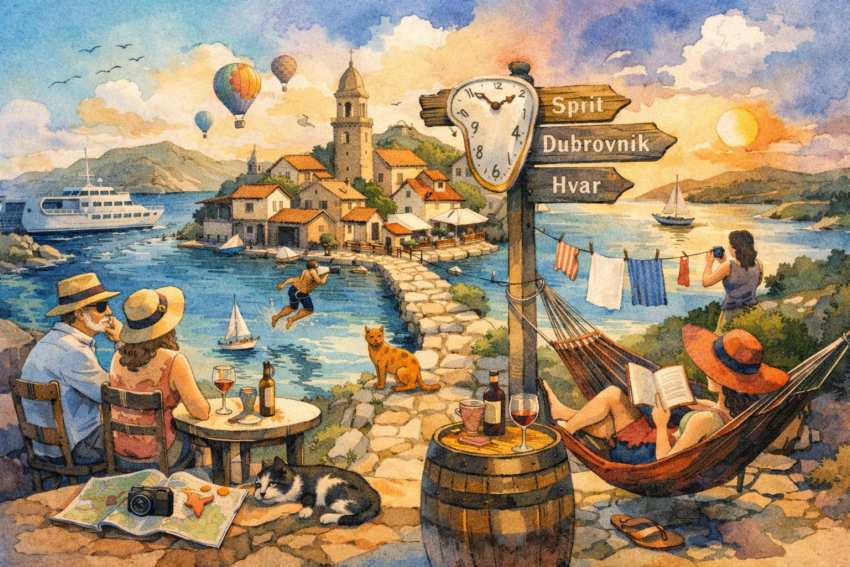
Slow travel fits Croatia because the country rewards attention. Its old towns are not just backdrops; they’re living places with routines, shortcuts, and quiet moments that don’t show up on a top-ten list. The islands aren’t designed for speed. Neither are the coastal rhythms, where dinner naturally drifts later, swims happen whenever the sea looks irresistible, and the best view might appear when you’re not “supposed” to be looking for it.
Checklist Travel Has a Hidden Cost
A checklist itinerary can make a trip feel productive, but Croatia isn’t a productivity app. When every day is a sprint, you trade depth for motion: more keys in your pocket, more receipts in your bag, fewer real memories that have texture and time attached to them.There’s also a practical cost. Constant moving means constant logistics—checking in, checking out, chasing buses, dragging luggage over polished stone streets that were built long before wheels. Old towns are wonderful. Old-town stairs are less wonderful when you’re hauling a suitcase that sounds like it’s losing a small battle with gravity.
Sometimes a serious point needs saying plainly: rushing through historic places turns them into scenery. You might see a cathedral, but you won’t notice the way locals step inside for five minutes of quiet. You might walk the walls, but you won’t catch the shift in light that changes everything about the view at the end of the day.
Choose One or Two Bases and Let Them Unfold
A smart slow-travel move in Croatia is to pick a base that gives you options without forcing constant relocation. Think of it as building a small, comfortable orbit.Along the coast, places like Split or Dubrovnik can work as hubs if you’re willing to treat them as living cities rather than single-day attractions. Inland, towns near national parks let you mix nature days with slower evenings. On islands, choosing one island and exploring it well beats island-hopping like you’re collecting stamps under a deadline.
Here’s a practical way to decide on bases:
- Pick one “anchor” city where transport links are easy and day trips are realistic.
- Add one slower spot—an island or smaller coastal town—where your biggest plan is deciding when to swim.
- Stay at least three nights in each place so your second day isn’t spent recovering from your first day’s logistics.
Ferry Days Are Not “Free” Days
Croatia’s ferries are part of the charm—until you schedule them like they’re elevators. On paper, an island hop can look like a neat little line on a route map. In practice, ferry days come with waiting, boarding, weather quirks, and the universal law that the one café you want near the port will be closed exactly when you arrive hungry.Plan ferry days with breathing room. Do one major move, then keep the rest of the day light. If you arrive early, great: you’ve earned an extra swim, not an extra sprint across a historic center while muttering about “efficiency.” If you arrive late, you haven’t sacrificed a museum you were never going to properly enjoy anyway.
A serious note again: respecting travel time is a form of respect for the trip itself. It prevents frustration, reduces missed connections, and keeps you from treating Croatia like a set of obstacles between you and your next photo.
Local Life Happens Between the Sights
Slow travel shines in the spaces between attractions. In Croatia, those spaces are full of daily rituals: morning coffee that stretches longer than expected, markets that reward wandering, quiet streets after cruise crowds thin out, and small neighborhood restaurants where the menu doesn’t try to impress you with twelve cuisines at once.Try building days around ordinary anchors instead of headline sights. Coffee in the same place two mornings in a row. A market visit where you buy fruit you actually eat. A late-afternoon walk without a destination. These are the moments that turn “I went to Croatia” into “I remember how Croatia felt.”
You can still do the big-name experiences. Slow travel doesn’t mean skipping; it means spacing. Croatia offers plenty, but it doesn’t demand that you consume it all in one frantic week like you’re racing a closing time.
When Staying Put Becomes a Skill
There’s a moment in slow travel when something quietly shifts. You stop checking the time so often. You recognize the bakery window you walked past yesterday. The barista nods, not because you’re special, but because you’re familiar. In Croatia, this moment arrives quickly if you allow it.Staying longer in one place reveals patterns. You notice when the town wakes up and when it exhales. You learn which streets empty out in the afternoon heat and which ones come alive after sunset. This kind of awareness doesn’t come from a packed schedule; it comes from repetition, from being there long enough to blend into the edges of daily life.
There’s humor in realizing how little you actually need to do to feel connected. One morning swim, one unplanned lunch that takes too long, one evening walk that somehow lasts an hour. None of these will appear on a checklist, but they tend to linger in memory far longer than “Stop 7 of 14.”
Weather, Whims, and Why Flexibility Wins
Croatia’s best days are not always predictable. A calm, glassy sea might demand an immediate swim, even if your plan involved museums. A sudden breeze might make a ferry crossing rougher than expected, nudging you toward a slower morning instead. Slow travel handles these moments with grace because it has room to move.Checklist itineraries treat surprises like problems. Slow itineraries treat them like information. If the heat is relentless, you adapt. If a village festival appears without warning, you stay. This flexibility isn’t laziness; it’s responsiveness, and Croatia responds generously when you meet it halfway.
A serious point deserves space here: travel fatigue is real. Constant decision-making, navigation, and packing wears people down. Slower pacing protects your energy, which in turn sharpens attention. When you’re less tired, you’re more present—and presence is what turns travel into something meaningful rather than merely documented.
Doing Less Without Missing Out
The fear behind slowing down is always the same: missing out. Croatia answers that fear quietly. By doing less, you often see more—not in quantity, but in clarity. You notice details. You hear conversations. You catch light changing across stone walls that have seen centuries come and go without consulting an itinerary app.Ironically, slow travel often leads to better “highlights” anyway. Locals suggest places you won’t find online. A casual chat turns into a boat ride invitation. A free afternoon becomes the best day of the trip. None of these moments respond well to tight scheduling.
You still leave with stories. They’re just better shaped, less rushed, and harder to summarize in bullet points—which is usually a good sign.
Taking It Slow and Getting There Faster
Croatia doesn’t need to be conquered, completed, or efficiently consumed. It asks for time, patience, and the willingness to let plans loosen around the edges. Slow travel isn’t about doing nothing; it’s about doing fewer things well, with enough space for the country to reveal itself on its own terms.When the trip ends, it won’t feel unfinished. It will feel complete in a quieter way—like you didn’t just pass through, but stayed long enough to understand why leaving is always the hardest part.
Article kindly provided by laganini.com