
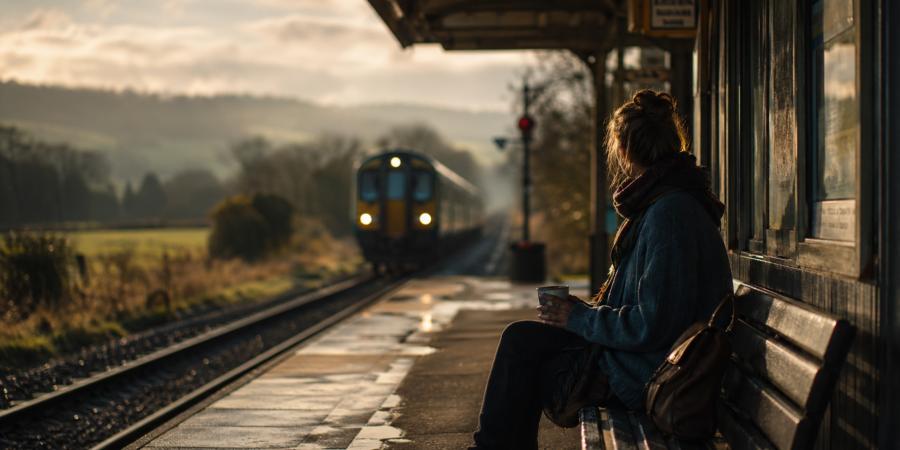
Travel photography tends to orbit around big moments—sunsets, monuments, dramatic landscapes. Yet the quieter scenes surrounding them often carry more texture. The pause before a train arrives, the tired smile after climbing a hill, the subtle glance between people who have shared a long day. These are not accidents. They are opportunities.
What Happens Before the Big Moment
There is a particular energy in the moments leading up to something anticipated. People check their watches, shift their weight, scan the distance as if willing something to appear sooner.Capturing this requires attention rather than speed. Instead of waiting for the “main event,” observe how people behave while waiting for it. The small gestures—adjusting a backpack strap, brushing hair out of their face, staring into nothing—carry a quiet honesty.
In unfamiliar environments, anticipation is heightened. You don’t always know what will happen next, which can be frustrating or oddly liberating. Use that uncertainty. Frame scenes that include both the subject and the environment. Let the surroundings provide context without overwhelming the moment.
A practical approach helps:
- Arrive earlier than necessary and resist the urge to scroll through your phone
- Choose a fixed position and let the scene evolve instead of chasing it
- Watch for repetition—people tend to reveal habits while waiting
The Aftermath Tells the Truth
Once the highlight is over, people drop their guard. The performance ends. Reactions replace anticipation, and those reactions are often more revealing than the event itself.Consider what follows a popular viewpoint. There is the relief of reaching it, the mild confusion about where to stand, and the collective realization that everyone else had the same idea. The resulting mix of satisfaction and subtle chaos is worth documenting.
Photographing these moments requires patience. Many photographers pack up immediately after the “main shot,” satisfied they’ve captured what they came for. Staying a few minutes longer can produce images with more depth.
Look for:
- Expressions shifting from excitement to calm
- People reviewing photos and reacting to them
- Physical cues of fatigue—slumped shoulders, slower movements
Timing Without Predictability
Travel rarely follows a clean script. Buses are late, weather changes, directions are misread. These disruptions are not obstacles to photography; they are often the source of better images.Instead of trying to control timing, learn to recognize patterns within unpredictability. People react in consistent ways to uncertainty. They pause, they look around, they adjust plans on the fly. These reactions create natural compositions.
Working in unfamiliar settings sharpens observation. You are more alert because you have to be. Use that heightened awareness to anticipate moments rather than react to them.
Keep your camera ready, but don’t hover over the shutter like it owes you money. The best images often appear when attention is steady rather than tense.
The in-between moments are not fillers. They are the connective tissue of a journey, revealing how experiences unfold rather than just how they peak.
Framing the Quiet Transitions
Composition becomes more subtle when nothing “obvious” is happening. Without a clear focal event, the frame has to do more of the storytelling work. This is where many travel photos either become interesting or quietly forgettable.Start by thinking in layers. Foreground, subject, and background should interact rather than compete. A person waiting at a bus stop framed against a distant mountain range says something different than the same person isolated against a blank wall. Neither is wrong, but the choice shapes the narrative.
Movement can also guide the eye. A figure walking out of frame suggests continuation, while someone standing still creates a pause. These small decisions affect how the viewer experiences the image.
Pay attention to edges. In busy travel environments, distractions love to sneak into the corners of your frame like uninvited guests who refuse to leave. Take a second to adjust your angle. Sometimes shifting a few steps left can turn visual chaos into something far more intentional.
And then there’s the occasional passerby who unknowingly improves your composition. They enter at just the right moment, look perfectly uninterested in your camera, and leave as if nothing happened. These are the unsung collaborators of travel photography.
Working With Unfamiliar Environments
Travel removes the comfort of routine. You don’t know the rhythms of a place, the pace of its people, or the small cues that locals take for granted. That uncertainty can feel like a disadvantage, but it forces closer observation.Spend a few minutes watching before you start shooting. Notice how people move through space, where they tend to pause, and how they interact with their surroundings. Patterns emerge quickly if you’re paying attention.
Light behaves differently depending on location, architecture, and time of day. Instead of chasing perfect conditions, adapt to what’s available. Harsh light can create strong contrasts that emphasize form, while softer light allows for more subtle expressions. Both can support in-between moments if used deliberately.
There is also the matter of blending in. You don’t need to become invisible, but reducing your presence helps people remain natural. Keep movements calm, avoid drawing unnecessary attention, and let scenes unfold without interference.
Occasionally, someone will notice you anyway and give a look that suggests you’ve just interrupted their internal monologue. Accept it. Lower the camera, smile, and move on. Not every moment is yours to capture.
Snapshots Between Stops
Journeys are rarely defined by a single image. They are built from fragments—small, quiet, sometimes imperfect scenes that connect larger experiences. Photographing the in-between moments adds continuity to your work and depth to your memories.These images may not draw immediate attention when scrolling through a gallery. They don’t shout. They don’t demand applause. But over time, they tend to linger. They remind you how a place felt rather than just how it looked.
There’s also a certain satisfaction in capturing something others overlook. While everyone else is focused on the obvious, you’re noticing the details that quietly define the experience. It’s less about being clever and more about being present.
In the end, the highlight still matters. It has its place. But the moments surrounding it often carry the story forward. And sometimes, the most memorable photograph from a trip isn’t the one you planned at all—it’s the one that happened while you were waiting for something else.
Article kindly provided by daygordonphoto.com