
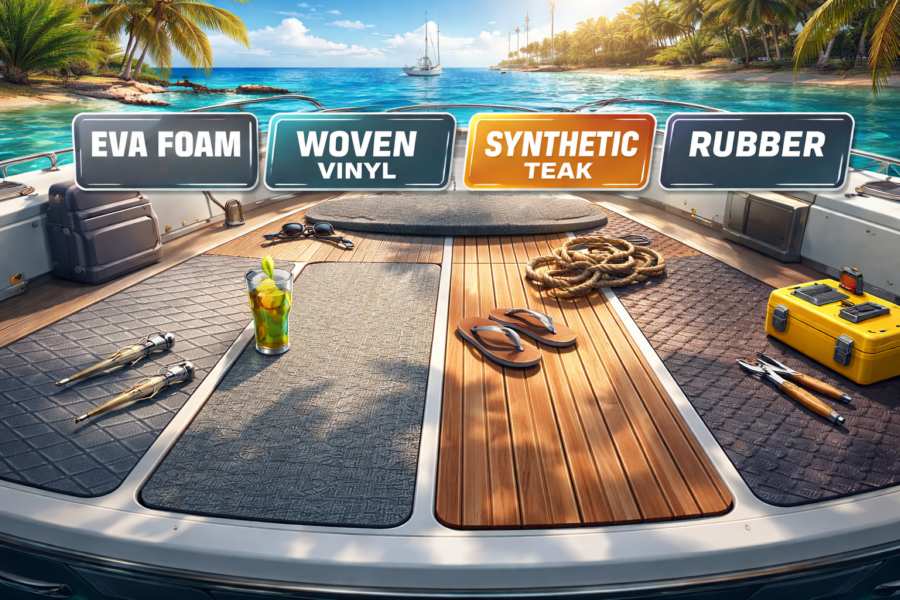
EVA Foam Floating Comfort With Serious Grip
EVA foam has become the darling of anglers, paddleboarders, and anyone who spends long hours standing. This material is lightweight, cushioned, and grippy, even when water is sloshing around. It absorbs shock, which can save knees and backs during long fishing sessions or choppy rides.Durability is respectable, though not invincible. Sharp hooks, heavy coolers dragged across the surface, and careless pets with enthusiastic claws can leave marks. The upside is maintenance simplicity. Most messes rinse off with water and mild soap. No special cleaners, no scrubbing rituals worthy of a gym workout.
Where EVA foam shines brightest is comfort-focused boating. It suits fishing platforms, swim decks, and family boats where barefoot traffic is common. It also stays cooler than many traditional surfaces under direct sun, which helps prevent the classic hot-foot shuffle across the deck.
- Soft underfoot and joint-friendly
- Strong traction when wet
- Easy to clean and quick to dry
Woven Vinyl Built for Abuse and Spilled Drinks
Woven vinyl looks deceptively refined, but it is secretly tough. This material is engineered to handle sun exposure, moisture, and frequent traffic without breaking down. Unlike traditional carpet, woven vinyl does not trap water deep inside its fibers. That means faster drying and far less opportunity for odor to develop.From a serious standpoint, woven vinyl stands out for longevity. It resists UV damage better than many older flooring options and holds color well over time. It also performs nicely in boats that see frequent use, such as pontoons, tour boats, or family cruisers that host everything from fishing gear to snack explosions.
Comfort is moderate. It does not provide the cushion of foam, but it is far friendlier to bare feet than rough fiberglass. Maintenance usually involves a quick hose-down and occasional gentle brushing.
Where it excels most is in high-traffic environments. If a boat sees daily action and little patience for delicate care routines, woven vinyl delivers reliability without demanding much attention in return.
Synthetic Teak Classic Looks Without the Wood Drama
Synthetic teak is popular for one main reason: it looks impressive. It delivers the warm, upscale appearance of traditional teak decking without the constant sanding, oiling, and quiet resentment that often follows real wood ownership. Modern versions are made from durable PVC blends that resist fading, moisture intrusion, and staining.From a serious performance standpoint, synthetic teak offers excellent longevity. It handles UV exposure well and maintains structural integrity in saltwater environments. Heat retention can be an issue on darker colors during peak summer sun, though many newer products address this with lighter tones and heat-reflective additives.
Maintenance is straightforward. Regular rinsing keeps it looking sharp, and stubborn stains usually respond to mild cleaners. Unlike natural teak, there is no need for seasonal treatments or special oils.
Synthetic teak excels on yachts, cruising boats, and vessels where visual appeal matters as much as function. It also suits owners who want the prestige of classic decking without adopting a new hobby centered around wood care.
Rubber Marine Flooring Industrial Strength With Practical Benefits
Rubber flooring does not try to be flashy. It shows up, does its job, and quietly leaves. This material is extremely durable, offers excellent traction, and absorbs impact better than many hard surfaces. It is commonly found on commercial boats, work vessels, and utility craft for good reason. Comfort levels vary depending on thickness and design, but rubber generally provides a stable, forgiving surface. It also resists oils, fuel spills, and harsh cleaning chemicals, making it ideal for boats that double as floating workshops.Where rubber shines is in environments that demand toughness. Charter boats, maintenance vessels, and fishing platforms benefit from its resilience and safety-focused performance. It may not win beauty contests, but it wins reliability awards on a daily basis.
Hybrid Solutions Mixing Style and Function
Some boat owners prefer not to commit to a single material. Hybrid flooring setups combine different surfaces in strategic zones. EVA foam might cover casting decks, while woven vinyl handles walkways and seating areas. Synthetic teak can highlight swim platforms while rubber protects work zones.This approach allows customization based on how each area is used. It also spreads wear more evenly and can extend the overall lifespan of flooring systems. The key is proper installation and material compatibility to prevent moisture traps and uneven transitions.
Hybrid setups are especially effective on multi-purpose boats. Fishing in the morning, cruising in the afternoon, and hosting friends in the evening demands flooring that adapts to changing needs.
Deck Decisions That Float Your Boat
Choosing marine flooring is less about trends and more about matching materials to real-world use. Comfort-focused boaters may gravitate toward EVA foam. High-traffic vessels often benefit from woven vinyl or rubber. Owners prioritizing appearance tend to favor synthetic teak. Hybrid layouts provide flexibility for those who refuse to choose just one personality for their boat.Practical evaluation matters. Climate, sun exposure, typical passenger activity, and maintenance tolerance should guide decisions more than showroom appeal. A surface that looks amazing but requires constant upkeep may lose its charm quickly.
The good news is that modern marine flooring offers more choice than ever. With thoughtful selection, boat owners can create decks that stay comfortable, durable, and visually appealing without turning routine maintenance into a second job. When the right surface is underfoot, the only thing left to worry about is whether the cooler is stocked and the weather forecast is behaving itself.
Article kindly provided by cudapowersports.com