
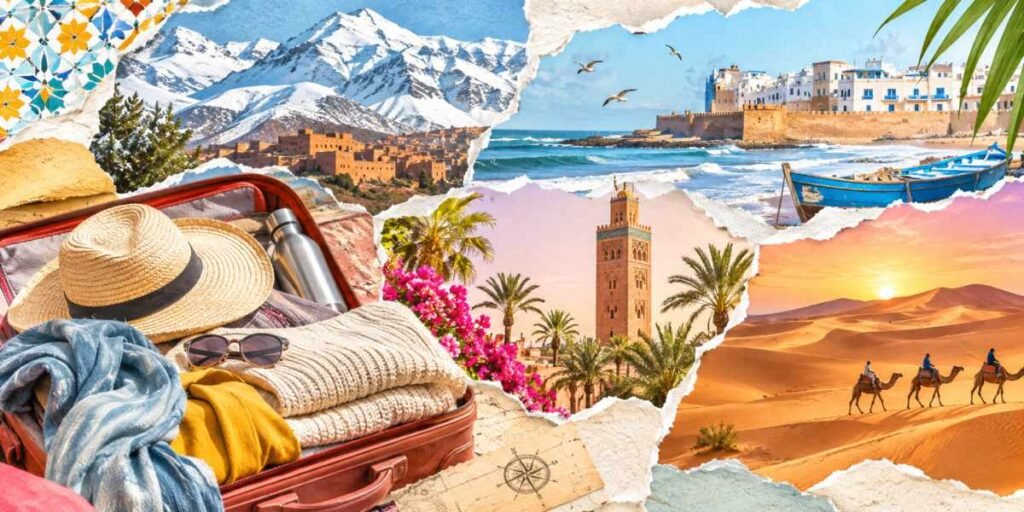
The country’s geography creates dramatically different weather conditions across relatively short distances. Altitude, ocean currents, prevailing winds and mountain barriers all influence local temperatures, making thoughtful packing an essential part of any extended Moroccan adventure.
Coastal Conditions Can Blow Your Plans Away
Morocco’s Atlantic coastline enjoys relatively moderate temperatures, with cities such as Casablanca and Essaouira benefiting from the cooling influence of the ocean. However, coastal winds can make temperatures feel considerably lower than weather forecasts suggest.Essaouira is particularly renowned for its windy conditions. Wearing a generously proportioned sunhat here is essentially a form of charitable donation to the Atlantic Ocean.
Pack a lightweight windproof jacket, breathable trousers and a comfortable pair of closed-toe shoes. Even during summer, evenings can feel surprisingly cool, and coastal humidity can leave clothing feeling damp. Quick-drying fabrics are particularly useful if you’re travelling between destinations regularly.
Taking Your Wardrobe to New Heights
The Atlas Mountains present an entirely different packing challenge. Snowfall is common at higher elevations during winter, and temperatures can drop below freezing. Even during warmer months, mountain evenings can be distinctly chilly.Travellers crossing high-altitude mountain passes should prepare for sudden weather changes. Thermal base layers, fleece jackets, waterproof outerwear and sturdy footwear are sensible additions to any luggage. During winter, check road conditions before departure, as snowfall can temporarily close certain mountain routes.
Layering is particularly effective because temperatures can change substantially as you descend into sheltered valleys. Rather than packing an enormous winter coat that occupies half your suitcase and requires its own accommodation arrangements, bring several thinner garments that can be combined or removed according to conditions. This approach also makes transitioning between Morocco’s mountain communities and warmer inland cities considerably more comfortable.
Keeping Your Cool in the Imperial Cities
Marrakech and Fez can experience intense summer heat, with daytime temperatures occasionally exceeding forty degrees Celsius. Narrow streets and shaded markets provide some relief, but extended sightseeing can quickly become exhausting without suitable clothing.Loose-fitting cotton and linen garments allow air to circulate while offering protection from direct sunlight. Clothing that covers the shoulders and knees is also a practical choice when visiting traditional neighbourhoods and religious sites where visitor access is permitted.
Carry a reusable water bottle, high-factor sunscreen and sunglasses. Consider bringing a small insulated bag for refreshments during longer drives. Nobody particularly enjoys drinking bottled water that has spent three hours auditioning for the role of soup.
Desert Nights Are Not What You Might Expect
The Sahara may be synonymous with scorching temperatures, but desert environments can experience significant temperature fluctuations between daylight and darkness. During winter, overnight temperatures can approach freezing, making warm clothing essential for anyone staying at a desert camp.A lightweight scarf offers protection against airborne sand, direct sunlight and chilly evening winds. Bring protective cases for electronic equipment, particularly cameras, as fine sand has an almost supernatural ability to penetrate seemingly impenetrable compartments.
Moisturiser, lip balm and eye drops can also prove useful in arid conditions. Low humidity accelerates moisture loss, and travellers accustomed to more humid climates may find the dryness uncomfortable after prolonged exposure.
Give Your Luggage a Seasonal Strategy
Spring and autumn generally offer comfortable conditions for exploring multiple regions, although temperature differences remain significant. Summer calls for greater protection against heat and ultraviolet exposure, while winter requires additional preparation for mountain travel and colder desert nights.Keep a small bag of essential clothing accessible during road journeys. Having to dismantle an entire luggage compartment beside a mountain road simply to retrieve a fleece is an experience best avoided.
No Need to Make a Mountain Out of a Sand Dune
Packing for Morocco is ultimately about versatility rather than volume. Choosing adaptable clothing, checking regional forecasts and anticipating changes in altitude can make travelling considerably more enjoyable. With a carefully considered wardrobe, you can experience snowy peaks, windswept beaches and sun-baked desert landscapes without dragging the contents of an entire department store behind you.Article kindly provided by morocco-hire-car.com