
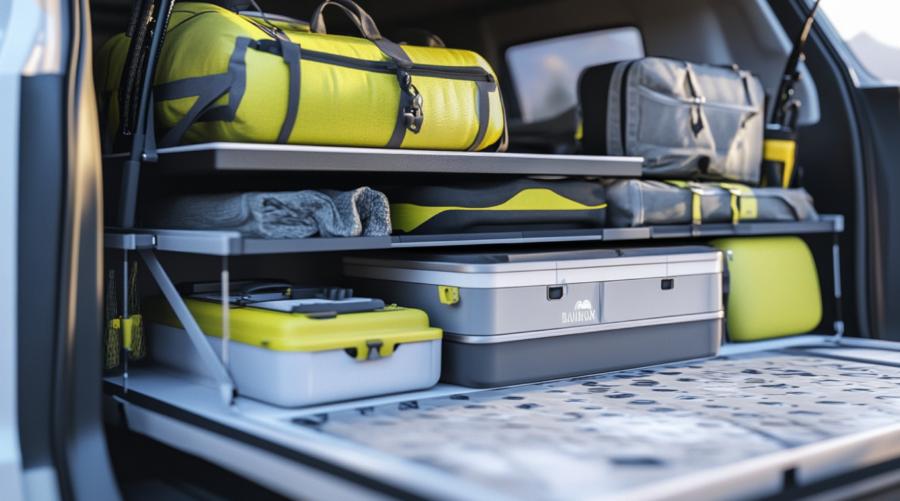
Modular Moves for Maximum Flexibility
Turning a truck bed into a mobile basecamp starts with shelving that understands commitment issues. Modular systems let you change layouts depending on whether you’re hauling camping gear, home-improvement supplies, or the mysterious oversized object a friend insists will “definitely fit.” Adjustable shelves, sliding drawers, and removable crates can be configured in endless ways, giving you the freedom to experiment without dedicating your entire weekend to permanent construction.One trick many people overlook is vertical efficiency. There’s usually far more wasted space between the bed floor and the top edge than expected. Building low-profile platforms with storage underneath creates two levels: the gear zone below and the sleep or load zone above. Think of it as a bunk bed for your equipment—except it never snores and always carries its weight.
Harnessing Hidden Corners
Some gear practically screams to roll around the bed during every turn. Instead of letting it reenact a dramatic chase scene, consider installing containment points in those oddly shaped areas near the tailgate or wheel wells. These corners become premium real estate when fitted with nets, elastic cords, or compact corner-mounted cubbies.A serious note: weight distribution matters. Throw too much mass on one side and you’ll feel it in the handling. Spread out heavier items and anchor them properly. Clever storage is fun; physics still wins every argument.
Load-Out Systems That Adapt Instantly
Fast-convert load-out systems are invaluable for anyone who switches between work, adventure, and weekend-warrior errands. These systems are essentially drop-in modules that slide, flip, or fold to reveal different setups. One minute you have a flat platform, the next you’ve revealed compartments worthy of a spy drama—minus the special effects, unless your tailgate squeak counts.You can build simple versions yourself with plywood, aluminum rails, and locking hinges. The goal is not perfection but adaptability. When a design can shift roles without demanding heavy lifting or redesign, you’ve hit the sweet spot where practicality meets a slight sense of triumph.
- Sliding drawers for tools, stove kits, or recovery gear
- Flip-up panels that reveal hidden bins beneath a sleep platform
- Quick-release clamps for crates or coolers
Gear Discipline Without Losing the Fun
Organization inside a truck-bed basecamp doesn’t have to resemble a military inspection, but it does need a touch of discipline if you want to avoid digging through a chaotic blend of ropes, socks, and the one wrench you always lose. Clear bins help, but labeling them brings a surprising sense of calm, especially when you’re searching for something in low light and everything suddenly looks identical.This is also where a bit of personal flair can help. Add color coding, small decals, or even a few mildly questionable drawings that remind you what’s inside each container. The practical benefit is obvious, but there’s another advantage: nobody mistakes your gear for theirs. If your cooler has a cartoon potato wearing sunglasses, nobody is “accidentally” taking it home.
Some outings call for seriousness, though. When preparing for longer trips or harsher conditions, tighten the system. Secure bins with tie-down points, double-check load balance, and keep essential items within effortless reach. Fun is welcome, but preparedness is mandatory when the weather decides to test your patience.
Shelter That Works Harder Than You Do
Even a basic truck bed can become a comfortable shelter with a bit of planning. A simple canopy or shell provides protection, but the magic happens when you integrate airflow panels, insulating layers, and adaptable lighting. String lights add charm, but functional LED strips save the day when you’re searching for that crucial piece of equipment you swore you packed.Ventilation is non-negotiable. A single night without it teaches lessons faster than any manual. Weatherproof screens or small pop-open windows offer airflow without letting in the local mosquito committee. In colder environments, a well-placed insulating mat under your sleeping platform can mean the difference between peaceful rest and developing a sudden appreciation for heated blankets.
Road-Tested Wisdom for Smooth Travels
Before you set off with your newly organized rolling headquarters, give it a trial run. Short shakedown trips reveal loose items, awkward layouts, and that one bin you placed in the absolute worst spot. Adjustments made early prevent frustration later—and help you avoid the dramatic sound of gear toppling like an avalanche every time you brake a bit harder than planned.Maintenance matters as well. Regularly check latches, hinges, and tie-down points. Dust builds up; bolts wiggle loose; fabrics sag. A few minutes of care after each trip saves hours of repair work and keeps your setup ready for whatever adventure or errand appears next.
Rolling Into the Sunset… Sort Of
The final joy of converting a truck bed into a basecamp isn’t just the comfort or organization—it’s the freedom to improvise. A setup that adapts to shifting plans becomes more than storage; it becomes a companion that encourages exploration, quiet moments, and a surprising number of improvised snacks prepared on tailgates.When every crate, drawer, and panel works with you rather than against you, the open road starts feeling like an invitation instead of a puzzle. And if your system occasionally rattles, squeaks, or reveals your questionable carpentry skills, that’s part of its charm. A basecamp is never truly finished; it evolves with every trip, every idea, and every unexpectedly large object that a friend promises will “totally fit this time.”
Article kindly provided by muddy-river.com