
Nyerere National Park: Africa’s Largest National Park
Nyerere National Park is the largest national park in Tanzania and the largest in Africa, covering an astonishing 30,893 square kilometres. To put that into perspective, it is larger than several entire countries. Its immense size allows wildlife to roam freely across forests, floodplains, rivers and open savannah, creating one of Africa’s richest natural ecosystems.The park sits at a relatively low altitude, averaging around 1,000 metres above sea level. Its climate follows a clear seasonal pattern. The dry season, which generally runs from June through November, is considered the best time for wildlife viewing. As water becomes scarcer, animals gather around rivers, lakes and waterholes, making sightings far more frequent. During the wetter months, the landscape transforms into lush greenery, attracting migratory birds and giving photographers spectacular scenery.
Visitors may encounter elephants, lions, leopards, buffalo, giraffes, zebras, hippos, crocodiles and one of Africa’s most significant populations of endangered African wild dogs. More than 440 species of birds have also been recorded here, making it a paradise for birdwatchers. Even people who normally struggle to tell a heron from a house sparrow often find themselves reaching for a bird guide before the day is over.
The Fascinating History of Nyerere National Park
The area’s conservation story stretches back more than a century. It first received formal protection in 1896 during the period of German colonial administration. Later, in 1922, it became known as the Selous Game Reserve, named after British explorer and conservationist Frederick Selous.For decades, the Selous Game Reserve ranked among the world’s largest protected wildlife areas, covering approximately 50,000 square kilometres. In 2019, the northern section of the reserve, approximately 30,000 square kilometres, was officially designated as Nyerere National Park in honour of Tanzania’s first president, Julius Kambarage Nyerere, who strongly supported wildlife conservation and the protection of the nation’s natural heritage.
Today, the northern portion is dedicated primarily to photographic tourism, while parts of the southern reserve continue to operate under tightly regulated hunting concessions.
Safari Experiences Unlike Anywhere Else
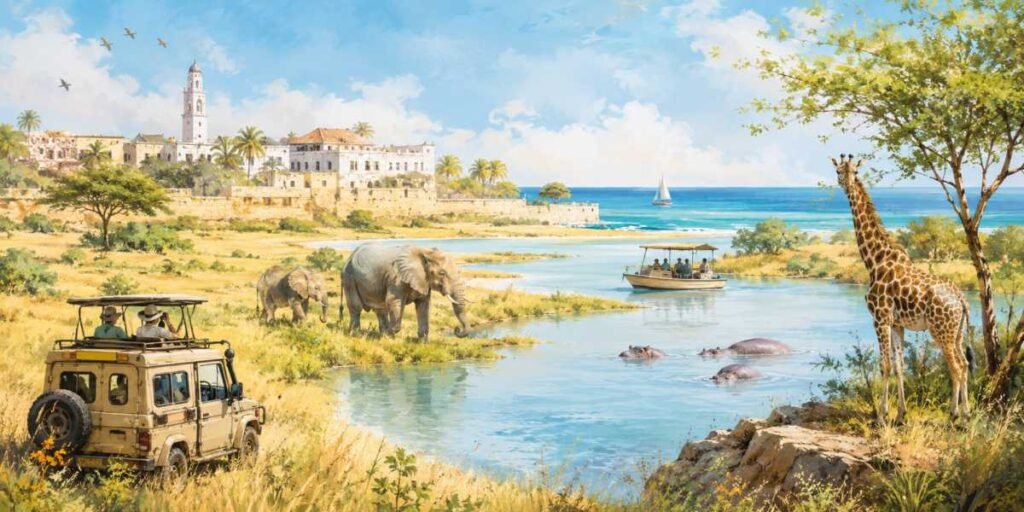
One of the greatest attractions of Nyerere National Park is the variety of safari experiences available. Traditional game drives remain popular, but the park offers activities that are much less common elsewhere in East Africa.Boat safaris along the Rufiji River allow visitors to observe hippos, crocodiles and elephants from the water, offering an entirely different perspective on the landscape. Walking safaris, led by experienced guides and armed rangers, provide an opportunity to appreciate the smaller details of the bush, from animal tracks to medicinal plants and fascinating insects that often go unnoticed from a vehicle.
For those seeking something even more adventurous, fly camping allows guests to spend a night in the wilderness under canvas with only the sounds of nature for company. It certainly makes checking into a hotel afterwards feel unusually luxurious.
Combining Safari with Zanzibar
One of Nyerere National Park’s greatest advantages is its location. It lies relatively close to the Indian Ocean coast and is easily combined with a visit to the beautiful island of Zanzibar.Many travellers choose a fly-in safari directly from Zanzibar, allowing them to enjoy white sandy beaches, historic Stone Town and crystal-clear waters before experiencing Africa’s remarkable wildlife. Three-day safari packages are popular for shorter holidays, while itineraries ranging from five to ten days often combine Nyerere with other Southern Circuit destinations, creating a relaxed safari without long hours on the road.
Discovering Tanga
Further north along Tanzania’s coastline lies the historic city of Tanga, one of the country’s oldest ports and an often-overlooked destination for visitors seeking something beyond the typical tourist trail.Among its best-known attractions are the remarkable Amboni Caves, East Africa’s largest limestone cave system. Formed more than 150 million years ago, the caves have long been associated with local legends and oral history. They served as shelter for local communities and were connected to ancient trade routes that linked the East African coast with neighbouring regions, including present-day Kenya.
Beyond the caves, Tanga offers attractive beaches, colonial architecture, bustling markets and a relaxed coastal atmosphere. Its hotels and restaurants overlook the Indian Ocean, where sea breezes provide a welcome escape from the tropical heat. Sitting outside with fresh seafood and an ocean view has a remarkable ability to convince people that emails can probably wait until tomorrow.
Why Choose Tanzania’s Southern Circuit?
The Southern Circuit remains one of Africa’s least crowded safari regions. While famous northern parks attract large visitor numbers, the south offers enormous wilderness areas where travellers can spend hours exploring without encountering another vehicle.This quieter atmosphere appeals to photographers, families, honeymooners, wildlife enthusiasts and adventurous travellers looking for a more personal safari experience. The diversity of activities, combined with exceptional wildlife and dramatic scenery, creates memorable journeys that feel genuinely connected to nature.
Getting There
Travelling to Tanzania has become increasingly convenient thanks to numerous international airlines serving the country. Carriers including Emirates, Qatar Airways, Ethiopian Airlines, Air France-KLM, Swiss International Air Lines and several others operate regular connections to Tanzania.Most international visitors arrive through Julius Nyerere International Airport in Dar es Salaam, Tanzania’s largest commercial city. Before beginning a safari, many travellers spend a night or two enjoying the city’s hotels, restaurants and nearby beaches, making the transition from long-haul flight to bush adventure far more comfortable.
Accommodation for Every Budget
The Southern Circuit offers accommodation to suit almost every style of traveller. Budget camps provide comfortable bases for exploring the parks, while mid-range lodges balance affordability with excellent service. Luxury travellers can choose elegant safari lodges featuring spacious suites, gourmet dining, swimming pools and spectacular views overlooking rivers frequented by elephants and hippos.Many lodges are carefully designed to blend into the surrounding landscape, allowing guests to experience nature without sacrificing comfort.
Planning Your Safari
A wide selection of experienced tour operators organise wildlife safaris, fly-in safaris and tailor-made itineraries throughout southern Tanzania. Travellers can book directly with specialist safari companies or arrange packages through established safari camps and lodges, including Foxes Safari Camps, Serena Safari Lodges, Selous Impala Camp, Selous River Camp, Mivumo River Lodge and Rufiji River Camp.Whether you are dreaming of watching elephants cross the Rufiji River at sunset, exploring ancient limestone caves near the coast or relaxing on the beaches of Zanzibar after an unforgettable safari, Tanzania’s Southern Circuit offers a remarkable combination of wildlife, history, culture and scenery that continues to reward those willing to venture just a little farther from the usual tourist route.
Article kindly provided by kili-tanzanitesafaris.com