
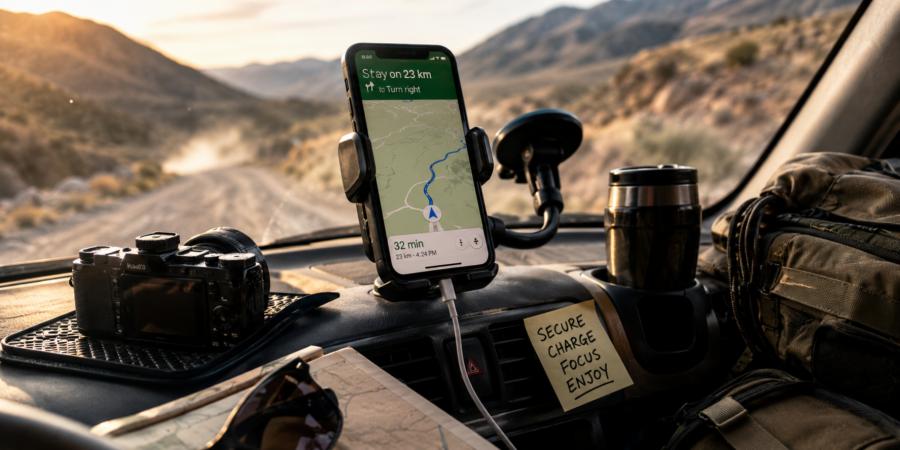
Travel has become inseparable from technology. Phones guide unfamiliar roads, tablets entertain restless passengers, cameras capture fleeting scenery, and portable devices keep communication flowing. Yet one travel problem receives surprisingly little attention until something goes wrong — keeping those devices secure while moving.
Movement Is Tougher on Devices Than Most People Realise
Many travellers assume a car or caravan provides a relatively stable environment for electronics. Reality has other plans.Road vibration may seem harmless, but repeated movement places constant stress on devices and accessories. Rough surfaces, potholes, corrugated roads, sudden braking, and sharp turns all create small impacts that accumulate over time.
The result is not always dramatic. Devices rarely announce their suffering with theatrical flair. Instead, problems build quietly.
Charging cables loosen.
Mounting points weaken.
Cases shift.
Camera stabilisation systems experience extra wear.
Even internal components can feel the effects of repeated shaking during long journeys.
This becomes particularly important during extended road trips or off-road travel where vibration is nearly constant. A device balancing on a console or sitting unsecured on a seat may survive one journey without complaint, only to develop faults later that seem mysterious and inconvenient.
Navigation failures are among the most frustrating consequences. Reliable access to maps matters, especially in unfamiliar areas where mobile coverage may already be unpredictable.
A phone that slips out of view or disconnects from charging at the wrong moment turns simple navigation into an awkward scavenger hunt involving one eye on the road and the other searching for escaped electronics.
That is a poor arrangement for both safety and sanity.
Loose Devices Create More Than Annoyance
Unsecured travel gear is often dismissed as a minor inconvenience. It is more than that.During sudden braking or unexpected manoeuvres, even lightweight devices become projectiles. A phone travelling across a cabin may sound mildly amusing until it meets a windscreen, passenger, or gear lever.
Tablets and cameras present even greater risks.
Serious travellers tend to plan for weather, fuel, accommodation, and route changes, but device security often receives little thought until an emergency stop introduces everyone to Newtonian physics.
The financial cost can also sting.
Modern smartphones and travel electronics are expensive companions. Repair bills rarely arrive with sympathy attached. A cracked screen collected during a scenic drive feels less like an adventure souvenir and more like an invoice with emotional damage included.
Choosing Stability Over Convenience
Convenience matters, but stability deserves equal attention.Many travellers rely on improvised solutions:
- Phones wedged beside cup holders
- Tablets balanced against bags
- Charging cables stretched with optimistic tension
- Devices resting on dashboards through what can only be described as mutual trust
Secure positioning should prioritise three things:
- Minimal vibration
- Easy visibility
- Reliable access without obstructing driving
Stable positioning protects both the device and the traveller.
Cables Have a Talent for Causing Trouble
A secure device is only part of the equation. Charging cables deserve equal scrutiny.Loose or poorly routed cables create a surprisingly long list of problems. They snag on bags, interfere with controls, disconnect during movement, and slowly wear at connection points through repeated bending.
Many travellers know the ritual. The phone battery drops to six percent, navigation remains active, and suddenly the charging cable develops standards worthy of a luxury hotel inspector. Angle slightly left? No charge. Breathe too heavily? Also no charge.
Good cable management is less glamorous than travel photography, yet it matters.
Shorter cables often perform better inside vehicles because they reduce tangling and movement. Routing cables away from steering areas and footwells also limits distraction and wear. Where possible, keeping cables lightly secured prevents repeated strain on charging ports.
A damaged cable may appear functional while quietly delivering inconsistent charging. For travellers relying on navigation, communication, or digital boarding information, that inconsistency can become an unwelcome travel companion.
Weather and Changing Conditions Add Another Layer
Travel rarely takes place under laboratory conditions.Heat, cold, moisture, dust, and direct sunlight place extra pressure on electronic devices.
High temperatures deserve particular respect. A phone left in direct sun inside a vehicle can overheat rapidly, reducing performance and potentially shortening battery life. Overheating also interferes with navigation and charging, which tends to happen precisely when directions become complicated.
Cold conditions create different problems. Battery efficiency drops, screens respond more slowly, and devices may shut down unexpectedly.
For travellers moving between climates or spending time outdoors, protection matters.
Simple habits help:
- Keep devices out of direct sunlight when parked
- Use protective cases suited to travel conditions
- Avoid leaving electronics loose in dusty or wet environments
- Carry backup charging options for longer journeys
Road Tested and Route Approved
Reliable travel technology is not about owning the newest device or carrying enough accessories to open a small electronics shop from the passenger seat.It comes down to preparation and secure use.
Stable positioning, sensible cable management, and awareness of changing conditions help protect expensive gear while keeping essential tools available when they matter most.
A secure phone or tablet may not seem exciting before departure. Yet halfway through a difficult route, during poor weather, or while navigating unfamiliar roads, dependable access to maps, music, and communication becomes quietly valuable.
Travel already supplies enough surprises. Devices launching unexpected escape attempts do not need to join the itinerary.
Protecting travel tech is ultimately less about gadgets and more about confidence. When equipment stays secure and accessible, attention returns where it belongs — on the road ahead and the experience itself.
Article kindly provided by modestmounts.com.au