
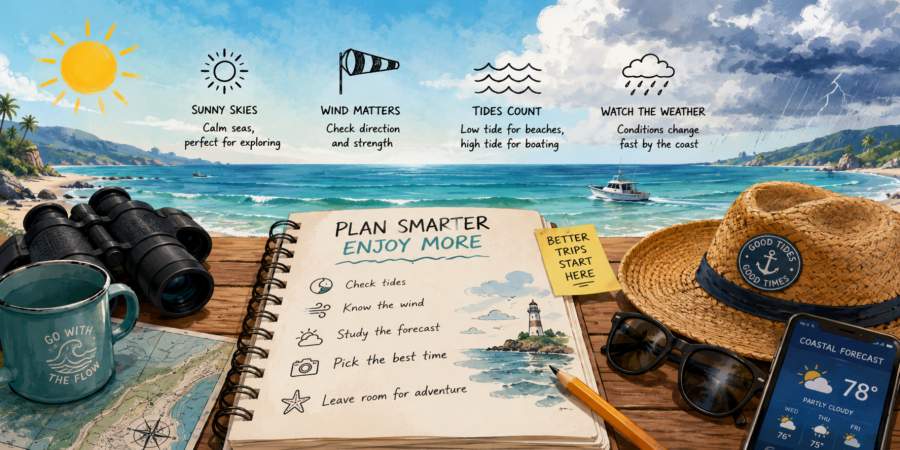
Many travelers plan ocean trips around hotel deals, restaurant recommendations, and photos that appear suspiciously free of wind. Those things matter, but the real architect of a coastal experience is often something less glamorous at first glance—water conditions.
Understanding tides, weather, and seasonal changes does not require a marine biology degree or the ability to speak fluent sailor. A little awareness can transform an average getaway into something smoother, safer, and far more memorable.
Tides Decide More Than Most People Expect
Tides quietly shape nearly every coastal activity. They influence swimming conditions, beach access, boating schedules, wildlife sightings, and even photography opportunities.A beach can appear generous and spacious during low tide, only to shrink dramatically a few hours later. Rocky coves and tide pools often reveal their hidden details when the water retreats. Shell collectors, photographers, and families exploring shorelines usually discover that timing matters as much as location.
High tide brings a different mood. Water may become deeper and more suitable for boating or certain water activities. Some beaches feel calmer during incoming tides, while others develop stronger currents or wave action.
Ignoring tidal schedules can lead to mildly inconvenient stories and occasionally more serious problems.
A traveler who wanders confidently across exposed rocks at low tide may later discover that nature has quietly rearranged the exit strategy. Nobody enjoys becoming a temporary island resident while clutching flip-flops and reconsidering life choices.
Checking tide charts before a coastal excursion is surprisingly simple and often overlooked.
- Low tide often favors shoreline exploration and tide pools
- High tide may improve boating and water access
- Changing tides affect currents and beach size
- Sunrise or sunset combined with favorable tides can improve photography conditions
Wind Writes Its Own Vacation Schedule
Wind rarely receives star billing when people discuss travel planning, yet it can determine whether an ocean day feels peaceful or unexpectedly athletic.Light winds often create calmer water and clearer reflections. Boat excursions, paddle activities, and scenic cruises typically benefit from these gentler conditions.
Strong winds tell a different story.
They shape waves, reduce visibility through spray, and influence comfort on open water. Even beaches known for calm conditions can become challenging when persistent winds build throughout the day.
This is not merely a matter of comfort. Wind affects safety.
Offshore winds can push floating equipment away from shore. Onshore winds may increase surf and alter swimming conditions. Local forecasts often provide valuable clues about how conditions may evolve during the day.
Many coastal areas follow recognizable wind patterns. Mornings may offer calmer conditions before afternoon breezes strengthen. Travelers who understand this rhythm often enjoy quieter beaches and smoother outings simply by adjusting their schedules.
Early risers sometimes receive an unexpected reward—a calmer ocean and fewer crowds competing for the same perfect photograph. The coffee may still be negotiating with your brain, but the shoreline often appreciates punctuality.
Seasonal Patterns Change the Entire Experience
An ocean destination is never the same place year-round. Seasonal weather patterns influence everything from water temperature to visibility, wildlife activity, and crowd levels.Warm seasons often attract larger crowds and deliver longer daylight hours. Beaches feel energetic, restaurants stay busy, and waterfront areas carry a lively rhythm. That atmosphere appeals to many travelers, but it also comes with practical considerations. Afternoon storms, stronger heat, and packed shorelines may influence how enjoyable certain activities feel.
Cooler months present a quieter version of coastal travel.
Some travelers avoid these periods entirely, assuming ocean destinations become sleepy or limited outside peak seasons. In reality, many coastlines reveal a different kind of appeal during calmer months. Wildlife viewing may improve, temperatures become more comfortable for exploring, and accommodations occasionally stop behaving like luxury auction items.
Water clarity can also vary seasonally. Rainfall, runoff, and changing currents affect visibility and color. That glowing turquoise water seen in travel photos often owes as much to seasonal conditions as camera filters and suspicious optimism.
Weather Forecasts Deserve More Than a Quick Glance
A forecast is not merely about deciding whether to pack sunscreen or a jacket.Coastal weather changes quickly, particularly where open water and shifting winds interact. Conditions that appear manageable on land may feel very different offshore or near exposed shorelines.
Pay attention to several factors rather than focusing only on temperature.
- Wind speed and direction
- Wave height and surf conditions
- Rain or storm probability
- Visibility and cloud cover for sightseeing or photography
Thunderstorms, rough seas, and rapidly changing conditions can disrupt excursions and create genuine hazards. Flexibility is not a travel failure. Sometimes the smartest ocean decision involves postponing an activity and letting the water win that particular debate.
Making Waves Without Wiping Out Plans
Better ocean vacations are rarely built on luck alone. They emerge from paying attention to the natural rhythms already shaping the coast.Tides reveal and conceal entire landscapes. Wind adjusts comfort and water conditions with surprising authority. Seasonal patterns influence crowds, wildlife, and visibility. Weather forecasts offer guidance that can improve safety and enjoyment alike.
The reward for this awareness is not simply avoiding inconvenience. It is gaining access to a richer coastal experience—one that feels less rushed and more connected to the place itself.
And when the water behaves beautifully after careful planning, feel free to accept the praise graciously. There is no need to explain that the tide chart deserves partial credit.
Article kindly provided by saltyscalescharter.com