
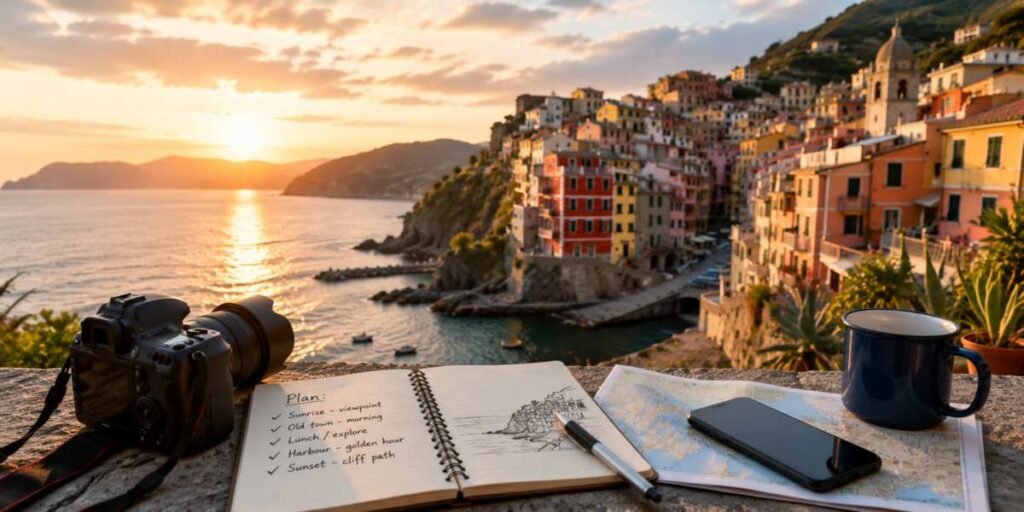
Great travel photography rarely depends on luck alone. It usually begins before a suitcase is packed, with a little research into locations, lighting, weather, and timing. Rather than racing through every famous attraction on a checklist, thoughtful planning allows you to experience destinations more deeply while giving yourself the time needed to create photographs worth keeping.
Start With Light Instead of Landmarks
Most travellers begin planning by listing attractions. Photographers often begin by asking a different question: When does this place look its best?A famous square at midday may be crowded, flat, and washed out by harsh sunlight. Visit the same location shortly after sunrise or before sunset, and everything changes. Shadows become softer, colours appear richer, and buildings gain texture that simply disappears under overhead sun.
Researching sunrise and sunset times before your trip helps you organise each day around the best natural light rather than squeezing photography into whatever spare moments remain.
This doesn’t mean waking before dawn every morning. Holidays should still feel like holidays. Choosing just a few mornings or evenings for dedicated photography often delivers far better results than trying to chase perfect light every single day.
Leave Space Between Destinations
An itinerary that schedules six attractions before lunch may look wonderfully efficient on paper. In reality, it often becomes a marathon involving maps, queues, transport delays, and wondering whether eating lunch while walking counts as multitasking.Photography benefits from slowing down.
Instead of squeezing every landmark into one day, consider visiting fewer places and spending longer in each one. Walking around a location allows you to discover unusual viewpoints, interesting details, changing light, and moments that most visitors never notice because they’re already heading towards the gift shop.
Some of the strongest travel photographs come from unexpected side streets rather than famous postcard viewpoints.
Use Weather as Part of the Plan
Many travellers check weather forecasts simply to decide what clothes to pack. Photographers can use forecasts much more creatively.Cloudy conditions often produce beautifully even lighting for portraits and architectural photography. Light rain can create reflections that transform ordinary streets into colourful compositions. Mist can simplify busy landscapes, while dramatic storm clouds frequently produce unforgettable skies once the weather clears.
Instead of treating imperfect weather as disappointment, think of it as an opportunity to photograph the destination differently.
Keeping one or two flexible days in your itinerary makes it easier to revisit outdoor locations if conditions improve later during the trip.
Research Busy Times, Not Just Opening Times
Many travel guides tell you when attractions open. Fewer explain when they become crowded.Arriving shortly after opening—or later in the afternoon once tour groups have moved on—can dramatically improve both your experience and your photographs.
Less crowded locations allow cleaner compositions and make it easier to experiment without feeling like you’re standing in the middle of a constantly moving parade.
Some useful research before travelling includes:
- Typical visitor numbers throughout the day.
- Seasonal events that may affect crowds.
- Temporary construction or restoration work.
- Alternative viewpoints nearby.
Balance Photography With Actually Seeing the Place
It is surprisingly easy to experience an entire destination through a camera screen. Before long, every meal becomes a photo opportunity, every doorway demands another angle, and your travelling companions begin recognising the back of your head better than your face.Good travel photography should enhance your experience, not replace it.
Put the camera away occasionally and simply observe what is happening around you. Listen to conversations drifting through a market, notice changing weather, or spend a few minutes enjoying a viewpoint without thinking about exposure settings. Those moments often inspire stronger photographs later because you have connected with the location rather than merely documenting it.
Build Flexibility Into Every Day
Even the most carefully researched itinerary will encounter surprises.Perhaps an unexpected festival fills the streets with colour, a local musician attracts an appreciative crowd, or a quiet alley suddenly catches beautiful evening light. Equally, transport delays, temporary closures or an uncooperative forecast might force you to change plans completely.
Leaving breathing room in your schedule allows you to respond to these opportunities instead of constantly checking your watch. Some of the finest travel photographs happen because someone chose curiosity over punctuality.
Treat your itinerary as a guide rather than an unbreakable contract. The destination rarely knows what timetable you printed before leaving home.
Pack for Comfort Rather Than Every Possibility
Carrying every camera accessory you own may seem reassuring when packing at home. Several hours into a day’s sightseeing, however, that reassuring backpack can begin negotiating directly with your shoulders.Choose equipment that matches the kind of trip you are taking. A lighter setup usually means you are more willing to explore on foot, climb viewpoints, wander through neighbourhoods and stay out longer. That extra mobility often produces more interesting photographs than carrying specialist equipment that spends the day zipped inside a heavy bag.
Comfort also affects creativity. When you are relaxed and enjoying the journey, you are more likely to notice interesting compositions and spontaneous moments.
Create Photographs With Stories Attached
Beautiful images become even more meaningful when you remember why you took them.Instead of focusing exclusively on famous landmarks, photograph details that capture the character of the trip. An elderly café owner arranging chairs before opening, colourful produce at a morning market, worn cobblestones after rainfall, or the view from a quiet bench can all become treasured reminders years later.
These photographs may never appear on a postcard, yet they often become the images people return to most because they represent genuine experiences rather than simply proving they visited somewhere famous.
A thoughtfully planned itinerary creates the freedom to notice these quieter moments instead of constantly racing toward the next attraction.
Picture This Perfectly
The most rewarding travel photography rarely comes from seeing the greatest number of places. It comes from seeing each place with patience, curiosity and enough time to appreciate what makes it unique.Planning around light, weather, quieter hours and realistic daily schedules transforms photography from an afterthought into a natural part of the journey. Instead of returning home with thousands of rushed snapshots, you are far more likely to come back with a carefully chosen collection of images that instantly bring back the sounds, atmosphere and emotions of the trip.
Years from now, those photographs will do far more than remind you where you travelled. They will remind you how it felt to be there, and that is always worth planning for.
Article kindly provided by gdholland.co.uk